
Ground Work |001| The Ground Beneath Us
I. Opening: Arrival
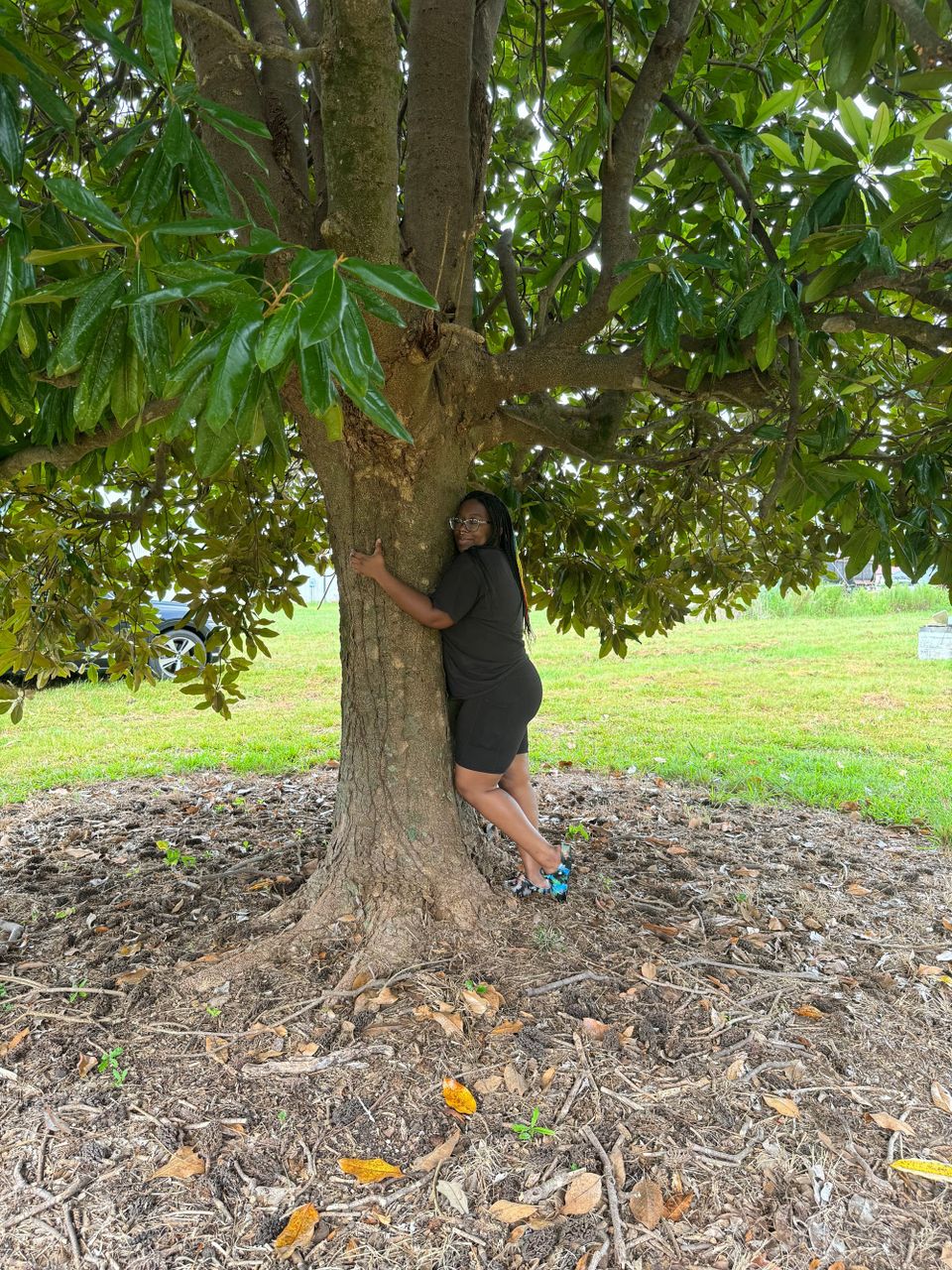
I’m Sabia (say-be-uh). I wear many titles, CEO, spiritual care practitioner, strategist, herbalist, and a few more, but I am a full spectrum doula first, a non-medical support person that provides emotional, physical, and informational support across the entire range of reproductive experiences, including birth, postpartum, miscarriage, stillbirth, and abortion.
I became a doula in 2015 as a volunteer with the Prison Birth Project (PBP) in Massachusetts, founded by Marianne Bullock. At PBP, we worked with incarcerated and formerly incarcerated pregnant people, many of whom were also navigating substance use and recovery. PBP is where I first learned about reproductive justice: the right to have children, to not have children, and to raise a family in a safe and sustainable community. And it is inside a jail where I learned about economic justice, the set of moral principles aimed at creating equitable economic institutions so that everyone has the opportunity to live a dignified, productive life.
What I witnessed there was what many people don’t see or think about, but it was real. I visited the jail and spoke with pregnant people who reported cancelled visits with their children, medical staff labeling them with complications without education or explanation, and accounts of being shackled despite the anti-shackling law having already passed. I watched pregnant incarcerated people get treated as liabilities. Unlike their non-pregnant peers, who could work and required little, pregnant people cost the institution something. So when it was possible, they were pushed toward early release so the jail would not have to pay for their care, and especially not for labor and delivery. To put it plainly: the body that generates value for the state loses value the moment it is growing life.
That is when I started to understand that money and reproductive justice have always been connected, even when that connection goes unnamed. And it usually does go unnamed, because money is not supposed to be the root of our systems including the justice, education and social services system and other systems that claim to protect our ability to access care and shape the future of our communities. But it is.
From that point forward, I made a commitment to always ask the questions and make the connections between reproductive justice and capitalism, with whoever was in the room with me, knowing I might be pushed out in the process. That tension is where this work began. Not in a boardroom. In a birth room behind bars. And if you are here, this is your ground too.
II. Defining the Terms: On Our Own Terms
Capitalism is not just an economic system. It is a set of rules created by a small but powerful group of people, people with power but limited lived experience, about what has value and what does not, about who is worth investing in and who is a liability, about what counts as productive and what gets pushed out of sight. It decides that a laboring person in a jail cell is a cost to be minimized. It decides that the doula sitting with her is doing something that doesn’t quite count as work. It decides that care, the center of our humanity, is worth very little, unless someone can find a way to package and sell it. This logic is not accidental. It is intentional, and it has always been extractive to people on the margins, pulling out not just money, but energy, culture, connection, time, health, and peace of mind. It has always had a particular relationship with reproduction: with who gets to bring life into the world, under what conditions, and who carries the cost of that life once it arrives. And it has always come with punishment for being poor, while rarely providing the access, time, or resources to be anything else.
Whatever brought you here, birth work, investment, policy, or personal experience, you already live in this intersection. Most of us do. We just haven’t always had the language for it.
III. The Personal Scale: What It Looks Like in a Body
The connection between reproduction and capitalism shows up in our everyday lives and in our bigger systems, usually without our say. Lactation, one of the central ways life has been sustained, carries a capitalistic history going back hundreds of years in the United States. Black enslaved women’s bodies were considered valuable when they could produce human milk for their enslavers’ children, often leaving them without enough milk to feed their own. In modern times, capitalism has turned lactation into a marketplace by creating an unspoken rule: doing it well requires buying power. The most expensive pump, nursing clothing, lactation pillows and specialty supplies have been positioned as the foundation of a successful lactation journey, discouraging many birthing people from even trying because the cost feels out of reach. The truth is that a stack of pillows, a hand pump, and an informed birthing person can build a beautiful lactation relationship.
This is not something that only happens to other people. It happens in kitchens and hospital rooms and WIC offices. It happens in the quiet moment when a birthing person looks at a price tag and decides it is not for them, not because their body is not capable, but because the system has made capability feel like something you have to buy.
IV. The Systemic Scale: What It Looks Like in a History
Then there is how reproduction and capitalism show up in our systems. Granny midwives attended nearly 90% of Black births and a significant portion of rural white births in the early 1900s, extending their care well beyond pregnancy to entire families and communities. That began to change when physicians started blaming them for high mortality rates, pointing to their lack of formal education and literacy rather than to the conditions of poverty and neglect that actually drove those numbers. What followed was federal policy that funneled money into medical institutions rather than into the hands of the midwives already doing the work. The question that history never answered is: what if that funding had gone directly to Granny midwives? Improving their access to resources, equipment, and the ability to train a whole new generation of well supported home birth midwives. Instead, they were pushed out. And we are still living with the consequences. Today we face a serious shortage of Black, Brown, and Indigenous midwives alongside one of the highest maternal mortality rates of any first world country. These are not separate facts. They are the same story.
We are seeing a similar pattern in doula care. Doulas were long seen as outside of the system, interrupters, and sometimes in the way. But as doulas have gained popularity with birthing people seeking the time, education, and presence that our current medical system cannot provide, something shifted. Doulas are now being reimbursed by private health insurance and Medicaid in many states, and hired to work in the exact spaces that once wanted nothing to do with them, until doulas became a way to increase profits. What remains unclear is how much doulas actually generate for a system that spent years calling us illegitimate. This pattern is not unique to birth work. Acupuncture, chiropractic care, bodywork, practices rooted in community and relationship, have all walked this same road. The question worth sitting with is: what do these practices lose when they become billing codes in a system that puts profit over people, time and time again? Ground Work is a place to name this pattern before it names us.
V. Why This Matters: Speaking to Both Sides of the Table
To my fellow birth workers: understanding this history is not optional. It shapes your pricing, your burnout, your relationships with institutions, and your sense of worth inside systems that have always been unsure about whether you belong.
To investors: if you are writing checks in reproductive health without this context, you are repeating the extraction. The ground level view is not a nice to have. It is not always warm and fuzzy. It is heavy. It is exhausting. But this is where you can actually lighten the load, and where you can come to understand that this work is not about charity. It is about the realization that a care system built for all of us benefits all of us, including you.
Care is capital. Not metaphorically. Literally. The work of this newsletter is to bridge the gap between the people doing the work and the people with resources to support it, and to meet on common ground to build a care system that actually works. This is the work. This is the ground.
VI. Closing: Welcome to Common Ground
Ground Work is a biweekly publication at the intersection of care, capital, and birth work, written for birth workers who need business and policy support, and for investors who need ground-level context before writing another check in maternal health. Care is capital. The newsletter proves it.
Every issue arrives with the same eight sections, each one holding a different part of the whole. Root and Ground opens us, setting the tone and context for where we are in the larger conversation. The Plant Ally brings in the wisdom of herbal and embodied practice, because care has never been separate from the earth. The Ground Truth names what is actually happening in policy, systems, and the industry. The Practical gives you something you can use, whether that is a tool, a framework, or a resource you did not know you needed. The Energetic Read holds the spiritual and emotional current running underneath all of it, because this work lives in the body as much as it lives in the spreadsheet. What’s Moving tracks capital, opportunities, and shifts worth paying attention to. The Introduction brings someone new into the room, a practitioner, a founder, an investor, someone building at this intersection. And The Discernment closes us out, an invitation to sit with a question rather than rush toward an answer.
That structure is intentional. This newsletter is not just information. It is a practice. A way of showing up to hard material with your whole self, your analytical mind and your intuition, your business sense and your humanity, your expertise and your curiosity.
What Common Grounders share is not a profession or a credential. It is a belief. That every person deserves the conditions to decide whether, when, and how they bring life into the world. That care is not charity. That the systems shaping reproductive life were built by people who never had to depend on them. And that we can do better, not someday, but now, with intention and with each other.
Between issues, the community gathers in Common Ground, our Instagram channel, where the conversation continues, where questions get asked out loud, and where the people behind the work get to know one another beyond the page.
You did not stumble into this. Whether you have been in birth work for decades or you just wrote your first check toward reproductive health or you are somewhere in between trying to figure out where you fit, you are not starting over. The ground has always been here. You are arriving.