
Ground Work | Blog 006 | Postpartum Psychosis Is a Capital Story: What the Lindsay Clancy Trial Reveals About Care and Capital
Trigger warning: This edition of Ground Work discusses mental illness, postpartum mental health, death, and the loss of children. This blog post centers postpartum psychosis and may be difficult or distressing for some readers. Please take care of yourself while reading, and engage with the piece in whatever way feels safest in your body.
I. A Capital Story in Mental Health’s Clothes
The media landscape is currently consumed by the Lindsay Clancy case, a Massachusetts mother on trial for the murder of her three children - Cora, 5; Dawson, 3; and 8-month-old Callan in January 2023. Clancy has acknowledged her actions, and her defense is not arguing for innocence in a traditional sense, but demonstrating that this tragedy was the direct result of improperly managed postpartum psychosis. Postpartum psychosis (PPP) is a rare, severe, but entirely reversible mental health emergency that causes a parent to disconnect from reality through hallucinations and severe delusions. Psychosis can appear in a parent with zero prior mental health history, no diagnosis, no warning sign anyone would have screened for in advance. Left untreated or improperly treated, it can, and it has, ended in catastrophic loss.
As a doula, I work directly with parents navigating Perinatal Mood and Anxiety Disorders (PMADs). I have held space for hours in a client’s home as they slowly recover, and I have had to call emergency services myself while standing outside a locked bathroom door as a parent experiencing active delusions threatened harm.
Through these experiences, as well as my time navigating both sides of capital allocation as a grantee and an investor, I have come to see that cases like Lindsay Clancy’s cannot be understood in isolation. Whether you view her as legally culpable or not, this tragedy is directly connected to what happens when capital is detached from reproductive justice. The result is a total system failure, one that routinely abandons parents and ultimately fails children.
II. She Did Ask for Help
According to the evidence presented in court, Clancy sought out help repeatedly and through every channel available to her:
- Family Support: She asked her mother-in-law for personal support and specifically told her she had thoughts of harming her children. She also extended her maternity leave from her job as a labor and delivery nurse to focus on her health.
- Psychiatric and Clinical Care: She met with multiple clinicians, doctors, and mental health providers repeatedly to address her worsening condition, including anxiety, intrusive thoughts, and insomnia.
- Crisis Hotlines: She called a suicide crisis center twice to report her escalating mental distress.
- Inpatient Hospitalization: She checked herself into a psychiatric facility for a multi-day stay in early January 2023 and sought care in other facilities as well.
- Medication Management: She accepted and took numerous psychiatric prescriptions. Her defense attorney noted she was prescribed as many as 12 different medications (including antidepressants and sedatives) in a short period of time, as doctors frequently cycled through drugs due to side effects reported by Lindsay.
During her voluntary inpatient admission over New Year's Eve at a local hospital, the facility was understaffed due to the holiday, leaving nurses behind desks and providing minimal active treatment or engagement. After being admitted, Clancy reportedly did not see an actual physician for three days. Close monitoring and follow-up did not happen even though her mental health was severely impacted and clinicians knew she was caring for her children daily. Signs of bipolar disorder onset triggered by the postpartum period were not caught until the harm was done.
Even with access to care, the question in court is whether the care was adequate. I welcome you to come to your own conclusion.
III. The Limits of a Ten-Question Screen
Currently, postpartum mental health is evaluated at a 15-minute visit at the 6-week postpartum mark with 10 questions on the Edinburgh Postnatal Depression Scale or something similar. Parents read statements such as “I have been so unhappy that I have been crying” and “I have been so unhappy that I have difficulty sleeping”. They choose one of four responses: “yes, most of the time”, “yes, quite often”, “not very often”, and “No, not at all”.
There are no open-ended questions. There are no questions or conversations about how safe the person feels answering these questions without fear of punishment. There’s no question to help understand their patterns over time or to call in a person who could speak to who they are versus who they are becoming while possibly experiencing a PMAD knowingly or unknowingly.
Why would a vulnerable time such as the postpartum period, backed by research about postpartum mood disorders and the potential of psychosis and harm to self and others, rely on just 10 questions to identify a potentially hidden and sometimes deadly diagnosis?
IV. Guided by Accounting Rules, Not Medical Guidelines
Capital flows toward what can be measured, scaled, and returned. Postpartum care is relational, slow, and individualized- everything financial systems are bad at and at times refuse to invest in. The gaps in postpartum care aren’t an oversight. They result from valuing productivity and return over wellness and, ultimately, life, by following accounting rules rather than medical guidelines.
To see this dynamic in practice, we have to look directly at the structural mechanics of how healthcare is billed, coded, and funded. The following examples demonstrate how financial constraints directly shape clinical reality for postpartum parents:
The Six-Week Accounting Rule - A 15-minute appointment at 6 weeks exists because insurance companies built a flat-rate billing package that treats postpartum observation as a cost to minimize rather than as care to deliver. The American College of Obstetricians and Gynecologists (ACOG) suggests that postpartum parents be seen at 3 weeks and receive continuous, personalized care at least by their 12th week. However, the financial system of health insurance penalizes clinics that provide care before 6 weeks. Therefore, birthing people continue to begin receiving care at 6 weeks versus weeks sooner, a time when we are able to catch things such as PMADS, infection, lactation issues, and other complications, because our healthcare system is fining providers for wanting to be proactive vs reactive.
Uncoded and Unfunded: The Diagnostic Gap - Postpartum psychosis is not recognized as a standalone diagnosis in the Diagnostic and Statistical Manual of Mental Disorders (DSM). It exists only as a specifier, a footnote attached to other psychiatric conditions, restricted by an arbitrary 4-week onset window. This is not just a clinical oversight; it is an economic driver. In our medical system, what gets coded gets funded. Because the DSM refuses to name postpartum psychosis as a distinct disease entity, insurance companies feel no obligation to create specialized reimbursement codes for it, research capital bypasses it, and hospitals build zero dedicated infrastructure to treat it. The absence of a diagnostic code ensures that care remains unbillable, unfunded, and out of reach until a tragedy forces the legal system to step in.
Billion-Dollar Band-Aids - In 2022, state child welfare agencies across the United States spent 34.3 billion dollars on reactive intervention, backed by 17.3 billion in state and local funds, 16.8 billion in dedicated federal streams like Title IV-E, Medicaid, and Temporary Assistance for Needy Families (TANF), alongside 22 billion in revenue generated by tax-exempt child welfare nonprofits. This substantial multi-billion-dollar allocation demonstrates how seamlessly public money flows to manage crises after they happen, while preventative postpartum care is left to fight for scraps.
Disposable Bodies and Delayed Support - When a postpartum parent is navigating health care coverage and parental leave, if they are fortunate enough to have it, the process moves slowly. Moving through the bureaucracy of these processes leaves many people without coverage, waiting for delayed payments, and with little help navigating the system, all while in one of the most vulnerable times of their lives. As soon as their body can no longer be used to generate economic output, the support slows and, for many, stops.
The Value of Paid Presence - Postpartum care requires support in the form of presence, especially when someone is navigating mental health complications. Just as a provider is paid for their 15 minutes of presence, so should a doula and/or a family member taking time off work to care for their loved one. Consistent functional social support and early interventions cut the prevalence of postpartum mood and anxiety disorders in half, dropping symptom rates by 50 percent compared to parents without dedicated support. However, presence isn’t billable, so it isn’t valued, even though our ability to be present for postpartum parents early in their journey could increase the visibility of issues they face and enable earlier intervention.
To the investors reading this: Many people say care is a risky investment, that margins aren't wide enough, and the market is too unpredictable. I ask you to redefine risk. What is the actual cost of us refusing to invest in preventative postpartum care? The return on early intervention isn't just a financial metric; it is family safety, parental survival, and baseline wellness in our communities. If billions can be mobilized to fund the reactive systems that manage devastation after a tragedy occurs, why is capital still treating the paid presence required to prevent it as an unacceptable risk?
V. Now Add Race to the Equation
When we layer race onto an already broken postpartum mental health system, the failure is not random. It is historically consistent. Medical authority in the United States has a long, documented lineage of pathologizing Black distress, autonomy, and resistance rather than offering actual care.
In 1851, physician Samuel Cartwright introduced the concept of drapetomania, a pseudo-scientific diagnosis defining an enslaved person's desire to escape captivity as a mental disease. Instead of recognizing the natural human drive for freedom, medical authority rebranded self-emancipation as derangement. Go figure.
By the 1960s and 1970s, as Black Americans demanded civil rights, the psychiatric system pivoted again. Terms like hostility, aggression, and protest were mapped directly onto Black activists and communities. Legitimate frustration with systemic oppression was frequently reclassified as schizophrenia or severe belligerence, and the introduction of first-generation antipsychotics like Haldol provided clinicians with a convenient tool for chemical restraint, sedating patients labeled as uncooperative or hostile rather than addressing their environment.
We can lay those same threads over our current times. Modern clinical studies consistently show that Black individuals experiencing severe emotional trauma or postpartum mood disruptions are far more likely to be diagnosed with schizophrenia or chronic psychotic disorders, while white peers displaying identical symptoms are far more likely to be diagnosed with mood or stress-related conditions like depression, PTSD, or severe anxiety. Where a white parent in crisis is often viewed through a protective lens of vulnerability, medical complexity, and tragic circumstance, a Black parent in identical distress is far more likely to be met with behavioral policing, immediate child welfare intervention, and criminalization. Their righteous anger, confusion, or overwhelming fear gets translated into institutional noncompliance, threat, or dangerous intent. The system routinely refuses to see a Black parent who needs sustained, protective human presence, choosing instead to treat their distress as a threat to be managed, contained, or punished.
VI. Two Mothers, Two Endings
In 2017, Deasia Watkins was found guilty of aggravated murder and sentenced to 15 years to life after decapitating her baby, Jayniah Watkins, while suffering from postpartum psychosis. Deasia had originally pleaded not guilty by reason of insanity, but after court-ordered psychiatric treatment, she was found competent to stand trial. Jayniah had been removed from Deasia’s custody prior to the tragic event because she was mentally unwell and had been talking about demons. The court documented that she was unsafe around her child unless she took her prescribed medication, and then gave temporary custody to Deasia’s aunt. The father, James Brown, had not established paternity, so he did not have custody rights to Jayniah. Unbeknownst to social services, who had seen Jayniah just days before, the aunt allowed Deasia to live with her and left Deasia alone with Jayniah. When police got to the aunt’s home, Jayniah was deceased, and Deasia was found in bed covered in blood and visibly mentally unwell.
In 2002, Andrea Yates was convicted of capital murder and sentenced to life in prison after drowning all five of her children, Noah, Mary, John, Luke, and Paul, in the family bathtub while suffering from severe postpartum psychosis. Andrea had a well-documented psychiatric history, including severe postpartum depression, previous suicide attempts, and multiple inpatient psychiatric hospitalizations following the births of her fourth and fifth children. On the morning of June 20, 2001, during a brief one-hour window between her husband leaving for work and her mother-in-law arriving, Andrea filled the bathtub and systematically drowned each child one by one, leaving the four younger boys submerged while placing her infant daughter on a bed under a sheet. Immediately afterward, she called her husband, Rusty, repeatedly telling him it was time to come home, then called 911 to request a police officer and an ambulance. When law enforcement arrived at the home, Andrea was sitting calmly on the couch, drenched in water, speaking in a flat tone, and telling officers that she had killed her children so they could be saved from Satan. In 2005, her initial conviction was overturned after an expert witness gave false testimony during the trial. In 2006, Andrea was found not guilty by reason of insanity and moved from prison to a high-security state mental health facility, where she has repeatedly declined her right to an annual review hearing to seek release.
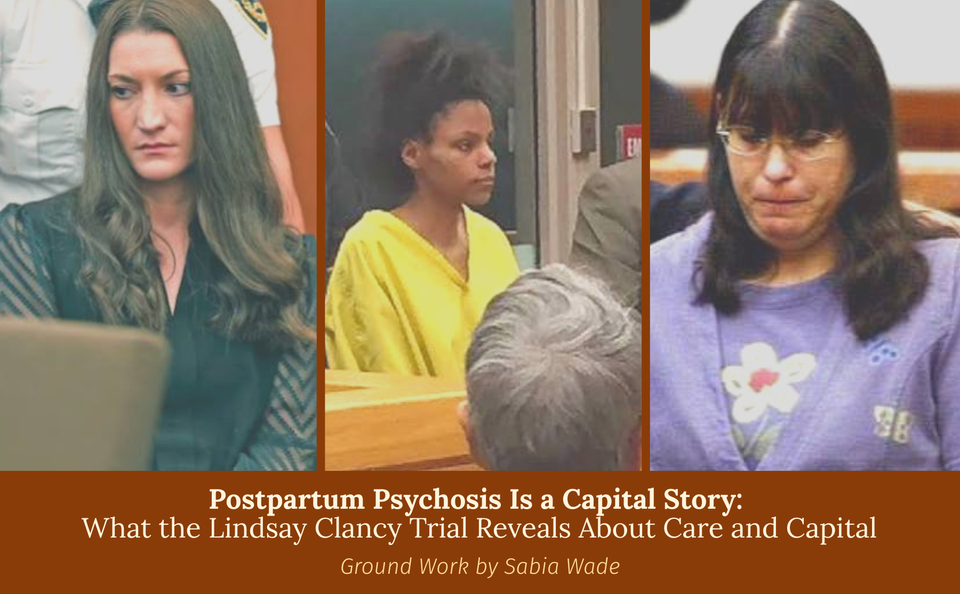
When you place Deasia Watkins, Andrea Yates, and Lindsay Clancy side by side, the contrast is clear, but the pattern is familiar. Lindsay Clancy, a white, middle-class labor and delivery nurse with structural support and financial access, received defensive medical sympathy and a public narrative framed around system failure and overmedication. Andrea Yates, a white mother in severe psychotic distress, was initially sentenced to life in prison before the legal system ultimately recognized her complete break from reality. Meanwhile, Deasia Watkins, a young Black mother navigating the same diagnosis, was stripped of her parental rights, left without sustained clinical support, and swiftly funneled straight into a 15-year-to-life prison sentence. All three women experienced catastrophic breaks from reality driven by postpartum psychosis, yet their race and socioeconomic standing determined whether the system viewed them as patients in need of mercy or criminals worthy of being disposed of. The legal outcomes vary, but the root truth remains the same: our healthcare and legal systems do not afford Black mothers in crisis the humanity, grace, or medical defense they grant to white mothers.
VII. Where the Capital Should Actually Go
Right now, while our formal systems fail, the people actually filling the gap are not institutional frameworks. If a parent is lucky enough to have support, it is family members, partners, friends, midwives, doulas, birth workers, and neighbors who show up day after day. They are the ones doing the unbilled, unmeasured labor of pattern recognition, noticing when sleep continues to slip away, when eye contact becomes hollow, or when anxiety turns into something far more dangerous.
To my fellow birth workers and community caretakers: I know the heavy weight of holding parents through a gap that shouldn't exist in the first place. Continue to trust your instincts, document shifts in patterns, and build protective community networks around your clients. Also ask yourselves: How much longer can we allow our unpaid, unmeasured presence to act as the sole safety net for a multi-billion dollar healthcare system that refuses to compensate us fairly or at all? Your labor deserves structural protection, fair reimbursement, and real infrastructure. We cannot be expected to quietly absorb the wreckage of a broken medical system on our own.
Reproductive health encompasses a wide range of experiences, and each stage deserves proactive investment in the health and wellness of birthing people and their families. We are seeing capital move into reproductive health, but often with the caveat that it is chasing an easy return in a massive, predictable market. For example, I love that menopause is finally getting the investment it is long overdue. However, I am also clear about why: menopause is being highly productized through apps, supplements, and telehealth platforms. Investors recognize that menopause care can fit into a 15-minute provider visit without requiring continuous in-person presence, unlike postpartum care. That makes the menopause market highly investable, even as federal funding for menopause research in the United States remains astonishingly low, generally ranging from $30 million to $56 million annually through the National Institutes of Health (NIH). That research figure represents less than 1 percent of the total NIH women’s health budget and less than 0.1 percent of the total overall NIH medical research budget.
Preventing postpartum psychosis and saving families requires a fundamental shift in how we allocate capital. It requires valuing human capital alongside financial capital, moving money away from purely transactional products and toward paid human presence. Capital often chases what is trending and easily scalable without requiring ongoing human labor. Menopause is a clear example of this scalability in real time. Postpartum psychosis prevention requires the exact opposite approach: paid presence, universal doula reimbursement, extended home visiting, and direct workforce investment in caregiving itself.
If we are serious about building sustainable parental health infrastructure, investors and funders must allocate capital flexibly across both non-profit and for-profit models. So many of the most impactful organizations filling the postpartum gap operate outside the traditional 501(c)(3) structure. Capital needs to meet these leaders where they are by funding models that strengthen community-based care and by paying care workers what they are worth, regardless of tax status.
Scalable Infrastructure for Paid Presence
Real systemic change happens when we fund the entities laying the groundwork for continuous, community-led support:
- Community-Based Workforce Pathways: Organizations like Mamatoto Village demonstrate how to build sustainable care infrastructure. By creating direct career pathways in maternal health for Black women and providing accessible perinatal services, they equip parents with the tools to navigate their care while building a paid, resilient caregiving workforce from within the community.
- Accessible Doula Infrastructure: Doula For The People works to remove financial barriers to continuous support, ensuring that full-spectrum doula care is not a luxury reserved for the wealthy, but an accessible standard of care for every birthing person.
- Restorative Postpartum Care Models: Entities like the Fourth Trimester Postnatal Retreat reframe postpartum recovery by creating physical spaces centered on rest, observation, and continuous clinical and non-clinical support during the most vulnerable weeks after birth.
- Community Peer Support Networks: Platforms like Pregnant Together demonstrate the power of accessible peer support networks, creating virtual and in-person spaces where parents connect, build community, and help each other recognize subtle shifts in mental health long before a crisis occurs.
Investing in these models is not charity. It is the construction of a protective safety net that prevents catastrophic system failure and literal death. Capital must stop demanding that care fit into a software interface and start funding the human infrastructure that actually keeps parents and their families supported.
VIII. A System Redefined by Care
The Lindsay Clancy trial, like the cases of Deasia Watkins and Andrea Yates before it, is not a mysterious, unexplainable failure. It is the predictable outcome of a healthcare system that views postpartum presence as a cost center, treats six-week visits as accounting milestones, and mobilizes billions of dollars to manage system failure only after a tragedy has occurred.
Reproductive justice demands that every parent has the economic, social, and medical support required to give birth, raise children, and live safely in thriving communities. That vision cannot be realized through 10-question surveys, 15-minute visits, or productized apps. It requires an uncompromising reallocation of capital toward human labor, community infrastructure, and sustained, paid presence.
If you or someone you know is navigating a perinatal mood disorder or experiencing symptoms of postpartum psychosis, you are not alone, and help exists. Please reach out to the Postpartum Support International (PSI) Helpline at 1-800-944-4773 or text "HOME" to 741741 to connect with the Crisis Text Line.
To the investors, funders, and community members reading this: the decision to invest in preventative postpartum care is not a risky bet on thin margins. It is the fundamental baseline for human survival, family safety, and community wellness. It is time to fund the presence that keeps parents and their families alive.
Sources & References
I. Clinical Case Details & Media Coverage
- MassLive & Court Proceedings (2023): Commonwealth v. Lindsay Clancy court transcripts, arraignment filings, and Defense Attorney Kevin Reddington’s opening statements regarding prescribed medications and inpatient care timelines at McLean Hospital.
- Hamilton County Court Records (2015–2017): State of Ohio v. Deasia Watkins case records regarding competency evaluations, custody determination, and sentencing.
- Texas Court of Criminal Appeals (2005–2006): State of Texas v. Andrea Yates appellate records, trial proceedings, and insanity defense rulings.
II. Screening Tools & Diagnostic Criteria
- Edinburgh Postnatal Depression Scale (EPDS): Cox, J.L., Holden, J.M., and Sagovsky, R. (1987). "Detection of Postnatal Depression: Development of the 10-item Edinburgh Postnatal Depression Scale." British Journal of Psychiatry, 150(6), 782-786.
- Diagnostic and Statistical Manual of Mental Disorders (DSM-5-TR): American Psychiatric Association (2022). Specifier for Perinatal Onset in Major Depressive Episode and Brief Psychotic Disorder.
III. Health Insurance, Clinical Guidelines & Expenditures
- ACOG Postpartum Care Guidelines: American College of Obstetricians and Gynecologists (2018; reaffirmed 2021). Committee Opinion No. 736: Optimizing Postpartum Care.
- Child Welfare System Financing: Rosinsky, K., et al. (2024). Child Welfare Financing SFY 2022: A survey of state and local expenditures. Child Trends.
- PMAD Interventions & Odds Ratios: Recommendations and statistical odds ratios on social support and PMAD prevention derived from perinatal mental health meta-analyses (Adjusted Odds Ratio 0.50).
IV. Race, Psychiatric History & Pathologization
- Historical Pathologization of Resistance: Cartwright, S. A. (1851). "Report on the Diseases and Physical Peculiarities of the Negro Race." The New Orleans Medical and Surgical Journal.
- Civil Rights Era & Psychiatric Shift: Metzl, J. M. (2009). The Protest Psychosis: How Schizophrenia Became a Black Disease. Beacon Press.
- Diagnostic Disparities in Modern Healthcare: Association of American Medical Colleges (AAMC) & American Psychological Association (APA) clinical studies on race-based diagnostic bias in mood disorders vs. psychotic spectrum disorders.
V. Research Funding & Reproductive Health Capital
- NIH Research Allocations: National Institutes of Health (NIH) Categorical Spending on Women's Health Research vs. Menopause Research (2020–2023 allocations averaging 30M–56M annually, representing <1% of women's health research spending).