Common Ground | Issue 007 | Postpartum Psychosis Is a Capital Story
🌱 ROOT AND GROUND
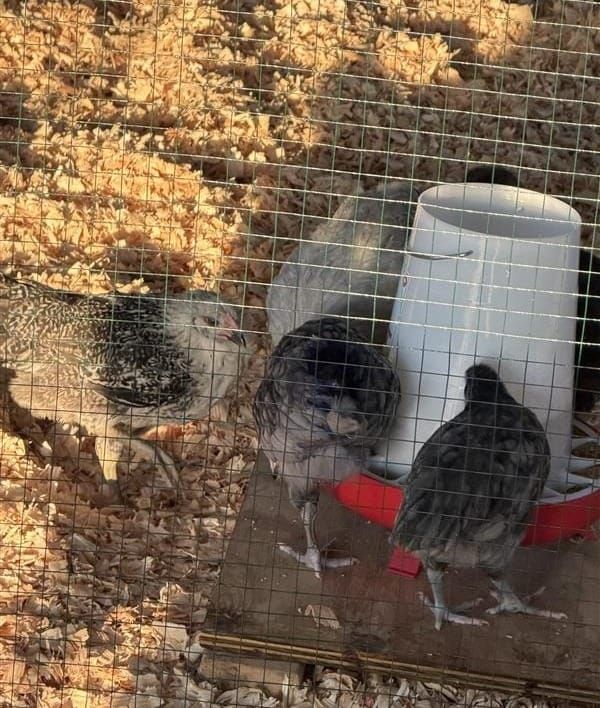
It’s been really busy in the last couple of weeks! So much so that I had to be okay with not releasing my weekly blog last week. We recently picked up the second set of chicks (7 new chicks in total) for our flock of 15. They have been a wee bit more challenging than our original flock of 8. It’s been two weeks, and we’ve had two chickens get their tails picked out by their sisters, and these new chickens have called for way more patience and slowness as they integrate with each other. They haven’t even met their other 8 sisters, and honestly, it’ll probably be a few weeks until they do.
So it’s been a couple of weeks of southern heat, two flocks to care for, and we’ve also been setting up our hoop houses with garden beds, new seeds, so much dirt, and a lot of labor. We still have one more hoop house to set up, but I’m so committed to growing our vegetables even through the colder seasons. I recently manifested a new friend who just loves coming to my land and helping, as well as two farm hands who are so sweet and productive. Receiving help is the universe’s way of saying I love you. You just have to accept it.
🌿 THE PLANT ALLY · Milky Oats / Avena sativa
For the nervous system that has been frayed by prolonged stress, hypervigilance, and deep exhaustion.
If you walk past a patch of green oats just before they fully ripen, you will see small seeds hanging from the stalks. When you squeeze a seed between your fingers, a sweet, white, milk-like liquid pops out. This is the milky oat stage, a brief window when the plant reaches its highest concentration of nervous-system medicine.
Milky oats do not act like a quick sedative. She can slowly rebuild, restore, and re-mineralize a depleted nervous system that has been running on adrenaline for far too long. She is especially supportive for caregivers, postpartum parents, and birth workers who feel fried, reactive, or emotionally inaccessible.
To make a simple milky oat straw tea, combine 2 tablespoons of dried milky oat tops and oat straw with 2 cups of boiling water. Cover tightly and steep for at least 30 minutes, or overnight for an infusion rich in minerals like calcium and magnesium. Strain and drink daily to rebuild your baseline.
A note from your clinical herbalist-in-training: Milky oat straw is generally considered very safe and gentle. However, individuals with severe celiac disease or gluten sensitivity should source certified gluten-free oat straw, as cross-contamination can occur during processing. Consult your care provider if you're unsure.
💡 THE GROUND TRUTH
When we look at cases like Lindsay Clancy, Deasia Watkins, or Andrea Yates, the public narrative usually focuses on individual criminality or sudden, unpredictable mental health breaks.
Sensationalized headlines obscure the underlying economic architecture. Postpartum psychosis (PPP) is not an unpredictable act of nature. It is a rare, severe, but entirely reversible mental health emergency. Yet our healthcare system treats postpartum care with a flat-rate, 6-week billing code that minimizes human involvement to protect corporate margins.
The gaps in postpartum care are not an oversight. They result from valuing productivity and economic output over wellness and human life. We live in a system that will seamlessly mobilize billions of dollars through child welfare and law enforcement to manage human devastation after a tragedy occurs, while treating the paid presence of doulas, community care, and home visits as an unbillable, high-risk expense.
This issue’s Ground Work essay, Postpartum Psychosis Is a Capital Story: What the Lindsay Clancy Trial Reveals About Care and Capital, breaks down the intersection of maternal healthcare, systemic racism, diagnostic gaps, and capital allocation. It calls on investors, providers, and birth workers to stop waiting for caregiving to look like a software product and start funding the human infrastructure that keeps parents alive.
📋 THE PRACTICAL
In this newsletter, I am asking both birth workers and capital allocators to set aside one hour to watch a crucial documentary: Louis Theroux: Mothers on the Edge (via Real Stories on YouTube).
Louis embeds inside specialist Mother and Baby Units (MBUs) in the UK, psychiatric facilities that treat mothers experiencing severe perinatal mental illness, including postpartum psychosis, while allowing them to stay safely alongside their infants.
- For birth workers and doulas: Pay close attention to how early symptoms manifest, how pattern shifts unfold, and what true, specialized clinical observation looks like in real time. Pay equal attention to the role of continuous human presence in keeping both parent and baby grounded during a severe psychotic break.
- For investors and capital allocators: Look at the structural infrastructure of a Mother and Baby Unit. Notice what it looks like when a healthcare system chooses to fund specialized inpatient care that preserves the parent-child dyad instead of defaulting to family separation and carceral child welfare interventions. Ask yourself why this level of restorative human-care infrastructure remains nearly nonexistent in the United States.
Watch the full hour documentary on YouTube → Louis Theroux Meets New Mothers Battling Severe Mental Illness After Pregnancy
✨ THE ENERGETIC READ
Where are you placing your capital?
Capital is not just the money in your bank account or the investments in your portfolio. Capital is your attention, your time, your emotional labor, and your physical presence.
So many of us have been conditioned to invest our capital into systems, relationships, and institutions that offer zero return on our wellness. We over-extend ourselves to hold up broken structures, hoping that if we just give a little more, the system will magically start caring for us in return.
When you spend your energy attempting to fix or subsidize a structure that was built to consume you, you drain the very resources you need to nourish your own life. Think about where your energy went this past week. Did it go toward paid presence, real community, and self-preservation? Or did it go toward managing the fallout of someone else’s refusal to build sustainable systems?
Start auditing where your personal capital goes. Reclaim the pieces that belong to you, and direct them back into the soil that actually feeds you.
🔗 WHAT'S MOVING
Three things worth your attention this cycle:
- Lindsay Clancy Trial Ends in Mistrial; What Comes Next: Judge William Sullivan declared a mistrial after an 11-1 deadlocked jury could not reach a unanimous verdict on whether Clancy was criminally responsible due to severe postpartum psychosis. As she remains in custody at Tewksbury State Hospital, Plymouth County prosecutors must now decide whether to pursue a retrial, negotiate a plea deal, or adjust the charges, with a status hearing set for September 29th. Beyond the courtroom, this outcome highlights the urgent, unresolved crisis surrounding maternal mental health infrastructure and the legal system's inability to hold the complexity of postpartum psychosis. https://www.bbc.com/news/live/cm3v49dg61gxt
- Addressing the Shortage: Healthcare Providers on Perinatal Psychiatry Access Programs: Maternal Mental Health Leadership Alliance (MMHLA) gathers direct perspectives from clinicians who rely on Perinatal Psychiatry Access Programs. It addresses the critical nationwide shortage of specialized perinatal psychiatrists and demonstrates how real-time peer consultation lines empower front-line providers, bridge care gaps, and change patient outcomes when specialized psychiatric care is otherwise out of reach. https://www.mmhla.org/articles/in-their-words-healthcare-providers-share-the-impact-of-perinatal-psychiatry-access-programs
- Rematriating the Economy: Grantmakers in the Arts explores how Indigenous leadership is reclaiming capital and building regenerative economic models. This piece paints a vivid picture of what the world looks like when we lead from the matriarchy: an economy where wealth is defined by collective wellbeing, where care and stewardship replace extraction, and where capital flows toward the preservation of life and community lineage rather than short-term profit. https://reader.giarts.org/jf-series/rematriating-the-economy
🤝 THE INTRODUCTION
When we talk about the power of continuous, culturally congruent care, we have to look at the community organizations that put this into practice every day at the grassroots level.
Doula For The People is a 501(c)(3) non-profit dedicated to expanding access to holistic postpartum doula support and nature-based perinatal wellness resources, specifically centering BIPOC communities. From their collective of skilled doulas and sliding-scale support programs to their Foodie Doula meal-delivery initiative, they are directly addressing the gaps where our formal healthcare systems fail parents.
I mention them not just as an organization to support, but as living proof of what community-led, non-carceral care infrastructure actually looks like when we prioritize human presence and food sovereignty over profit.
Get to know their work and support their collective here: https://doulaforthepeople.org/
🕯️ THE DISCERNMENT
We cannot continue to allow our unpaid, unmeasured presence to serve as the sole safety net for a multi-billion-dollar healthcare system that refuses to value us.
Holding space for others is sacred work, but holding space within a void created by systemic neglect will eventually crush the person doing the holding. True care requires boundaries, structural compensation, and the refusal to let your labor be exploited under the guise of passion or duty.
This week’s discernment is simple: where in your life or work are you acting as an unpaid safety net for a system or relationship that has the resources to pay, but chooses not to? Name it. Recognize the cost to your body. Begin setting the boundary that requires capital to meet care where it actually lives.
From the ground where care grows,
Sabia
Ground Work publishes every Tuesday. The Ground Work essay and the Common Ground newsletter alternate each week, so something is always in your inbox. Subscribe and find the full archive at ground-work-1.ghost.io