
Common Ground | Special Issue # 2 From Gertrude Magnolia | Summer 2026 Tending
I have been thinking about what it means to live a good life while you are still building and living it.
Not after or when I reach my golden years. Not once our barn is finished, and my next book is done, and many organizations are funded, and the necessary systems are changed. I am speaking about right now in the middle of the messiness, with the funder calls still needing scheduling in my email and the chickens waiting for their afternoon herbs and mealworms.
This is my existence and the tension I carry most days. The macro and the micro are pulling at each other constantly. The macro is large and urgent and never finished. It is this newsletter I am aiming to release weekly, a few weeks missed while I had to decide which ball needed to be dropped as I step in as Interim CEO at Orchid Capital Collective, a space building the future of reproductive health and justice. There is also a homestead I am building with urgency, as food recalls become more frequent without a government that cares about food safety. I am building while also holding questions about care and capital that I have been asking for eleven years, and will probably be asking for eleven more. The macro is the reason I get up. It is also the thing that can swallow you whole if you let it.
The micro is what brings me back:
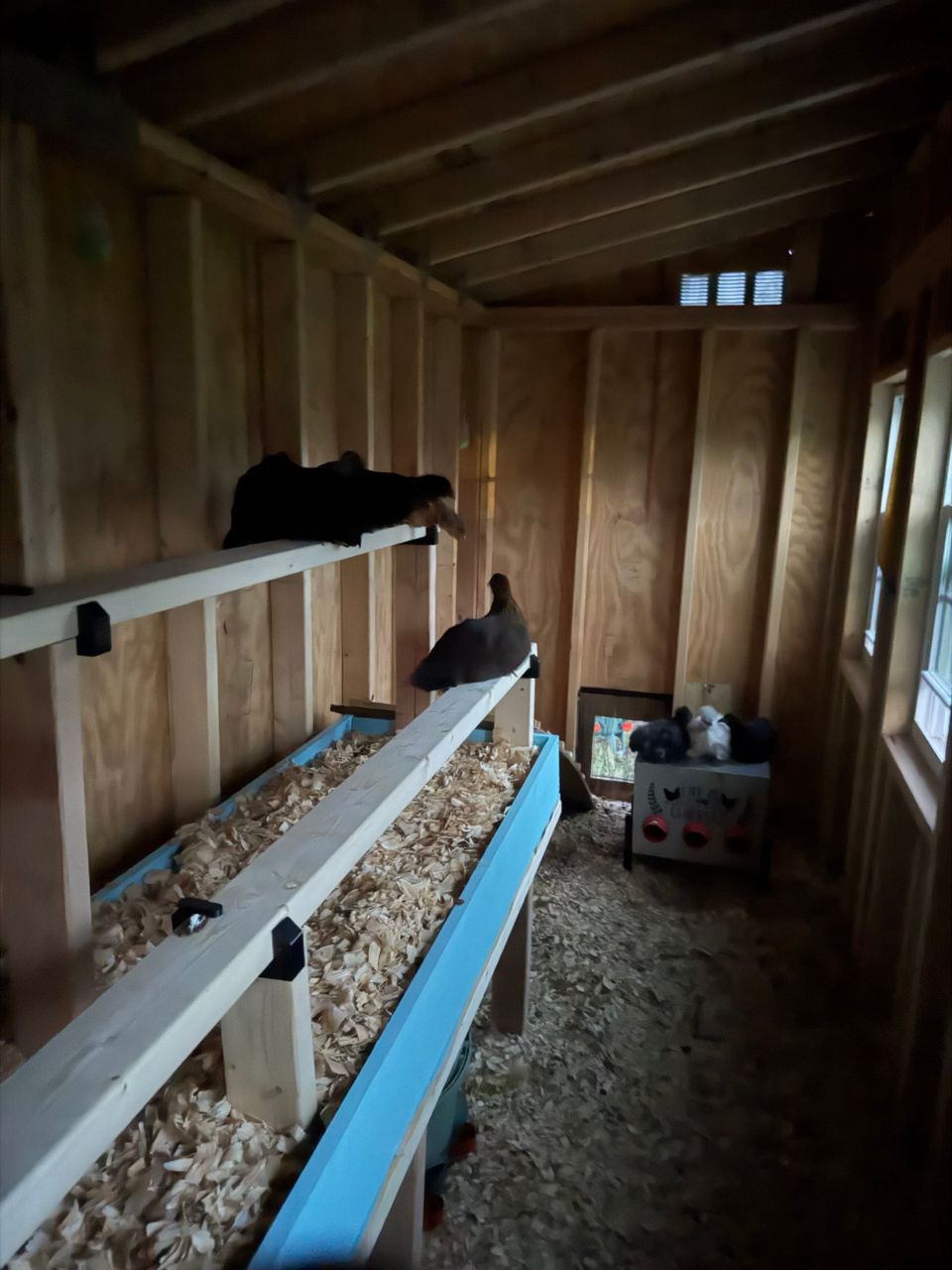
Sashá building horse fencing in the backyard, post by post, doing an extraordinary job at something neither of us had done before. Building our double barred nine foot roost bar that I took the lead on and watching our chicks love their new resting space. Cairo and Qash, our pups, cuddling with us every night like clockwork. The frogs. We fall asleep to what sounds like hundreds of them, rain bringing them out in numbers to sing us a lullaby. The porch garden being watered while I hold a chicken in a purse. Both growing our next harvest and showing each chick their land so when they start free-roaming, they know where home is.
I think about Papa Mack a lot on this land. My great-great-great-grandfather lived on this same road. The remnants of his wood home are right up the street, hidden in a bunch of pecan trees. He was a preacher who traveled by horse and carriage across North Carolina, carrying the word to churches that needed it. The macro of his life was enormous. The spiritual nourishment of entire communities moved through him, and yet I do not think he would have described a good life in the terms of his large impact in the community only. I think he understood, like the way people who live close to the land tend to understand, that goodness is not only found in the large things; it is found in the small ones. A moment to breathe, a plant coming up through the soil, gratitude said out loud before a meal, and a tasty bowl of collard greens and neckbones. My Nana, Papa Mack's granddaughter, made the best neckbones and collard greens.
My great uncle Bobby still talks about hearing Papa Mack preach. He was moved then, and he is moved now, at 86 years old, still carrying those words in his body. Uncle Bobby grew up on this land as a child. He is the son of Barlie and Gladys, the brother of my Nana, Ardel, aka Della Mae. He comes to help us with homestead chores now. He shows up and works this ground the same way he did as a boy, carrying seventy years of memory in his hands alongside whatever tool he picked up that morning.
I do not have a word for what it means to watch an 86 year old man tend land he grew up on. The land his parents bought for liberation, that left the family and came back, that is now being rebuilt by the next generation while he is still here to see it. I just know this is what this essay is trying to say– that a good life is not something you finish or only appreciate when it is almost complete;it is something you keep tending. If you are very lucky, you get to tend it alongside the people who tended it before you, a gift I do not take for granted.
Papa Mack rode this road. Uncle Bobby walked it as a boy and walks it still. Now I walk it carrying a chicken, a garden hose, and a plan to both nurture this land and utilize it to make ourselves as self-sustained as my ancestors were. I know this continuity is not accidental.
The chickens are twelve to fourteen weeks old now. They are growing into themselves, the baby fluff giving way to grown lady feathers. They recognize our faces, our energy, and remind us to play more as they run around like silly geese.
So far, Blueberry is the head chick in charge and our silkies, Karen and Jet, are at the bottom of the pecking order. Although I would never tell Karen that.
Seven more sisters are on the way next month. Fifteen chickens in total.
Uncle Bobby told us that Grandma Gladys was known for her chickens. I did not know that when we started planning the flock. I found out after, and that felt like something. It felt like the land was already holding the shape of what we were going to do before we knew we were going to do it.
Cyclospora, a parasite, is moving through the food system right now. People are getting sick from fresh produce, specifically the lettuce, parsley, and cilantro that the convenience food system told us were safe because someone else grew, packaged, and delivered them to a store where we could purchase them without ever touching the soil ourselves.
I walked outside and harvested collard greens, strawberries, and herbs from my own garden. I ate them without fear. I also delivered collard greens, basil, rosemary, oregano, and tomatoes to my cousin across the street. Papa Mack is her grandfather, and he’s my great-great-great grandfather. She breathed a sigh of relief to have fresh vegetables and herbs without having to worry about their origin. She then told me she has been on her land for 72 years, and everyone on my road had livestock for meat and grew their own fruit and vegetables, so seeing food as a threat was never an issue.
Something in that sentence I do not want to rush past. It is not just about food safety; it is about what it means to know your food. To have watched it grow. To have watered it yourself and fed the soil it grew in and decided what went into that soil and what did not. The feeling of harvesting from my own garden is not pride exactly. It is older than pride. It is something my nervous system recognizes as safe in a way that goes deeper than logic.
The recognition is inherited. The story of how so many of us lost access to it is worth naming directly.
We were told a story about convenience. That packaging was progress and also a sign of financial stability. That growing your own food was a marker of poverty, something people did before the modern food system made it unnecessary. That story was told to Black communities in particular, communities that had been growing and harvesting and feeding themselves and each other for generations, as a form of intentional disconnection wearing the language of modernity. What we were being disconnected from was not inefficiency. It was sovereignty and the loss of the ability to care and heal ourselves.
Papa Mack understood this. A good life, in his telling, was not about an amount of money, convenience, or productivity over presence; it was a bowl of collard greens and neckbones. It was a meal that came from somewhere you trusted. It was gratitude practiced not as a spiritual discipline but as a natural response to having enough and knowing where it came from. Radical, especially for Black families in the South who were systematically separated from the land and the knowledge that made that kind of sufficiency possible. Hard-won in every generation that carried it forward.
I want to be honest that I have access others do not. Land is a privilege in this political and economic moment. Not everyone can walk outside and harvest their own food, and I do not want to skip over that reality in my own joy about having it. What I can say is that the joy is real, political, and ancestral all at the same time. Every time I go out to that garden, I am doing something my great-great-grandparents did on this same ground. The food looks different. The tools look different. The feeling, I think, is the same.
The horse fencing is going up. When it is finished, the chickens will be able to move across the land on their own terms. We are preparing for our next flock arriving next month and after that, goats. The barn interior is still being planned. One side will house our animals; the other side will be a communal room, a gathering space, a place for people to come and sit and think, and be in community on land that has been holding community for generations. I am also planning my fall garden: Arugula, carrots, beets, broccoli, cabbage, onions, garlic, some kind of beans, and a few others.
Uncle Bobby comes and helps us work the land. An 86 year old man who grew up here, whose parents bought this ground, who heard Papa Mack preach on this same road, now picking up a tool and contributing to what the next generation is building on it. I do not think he would describe what he is doing as extraordinary. I think he would say it is just what you do. You show up. You work. You tend to what matters.
The whole lesson lives right here.
A good life is not something you arrive at. It is something you tend. Every day, in the middle of everything else, in the mud and the rain and the ongoing undone work of it. The macro will always be there. The funder calls, the policy fights, the systems that need changing. The micro is what makes it survivable. You water the garden. You carry the chicken. You sit with your elders. You fall asleep to the frogs.
You tend what you love and trust that it is also tending you.
To my Common Grounders:
What is your version of this? What brings you back to the present when the macro gets heavy? Who in your lineage understood something about a good life that you are still learning from?
Write it down if you can. Say their name out loud. Let them know the wisdom traveled.
The next regular issue of Ground Work is coming soon. In the meantime, Uncle Bobby came by this week, and the chickens know their names and the frogs are very, very loud. 🌿